
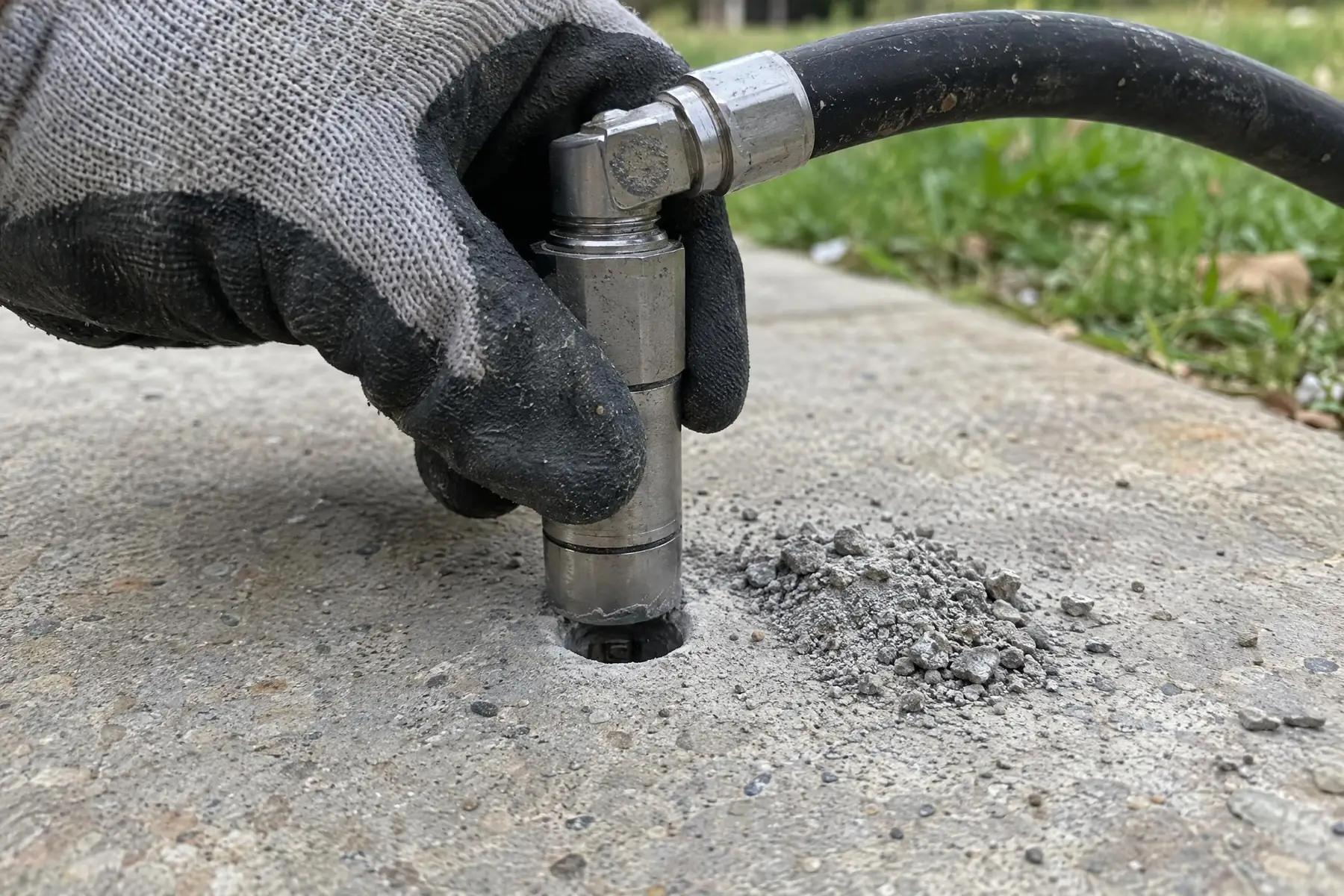
How Concrete Leveling Works: Why a Hollywood Slab Sinks First
A concrete slab rests on the soil beneath it. When that soil weakens and settles, the slab loses its support, stresses, cracks and sinks. The surface then picks up trip hazards at the joints and puddles where the slope has gone. Leveling fixes the support and not only the height, which is why the work starts with the soil.
Hollywood’s soil is sand over limestone, and sand fill compacts poorly. In the wettest months the water table in Margate and Basinger fine sand sits at 0 inches, and in Hallandale fine sand about 3 inches down. Water that moves through sand carries grains out from under the slab. The empty space it leaves is the void that foam fills, and the slab drops into it a little more each season.
Hollywood gets about 56 inches of rain a year, and the rainy season from May 15 to October 15 brings nearly 70% of it. Runoff slips under the slab edge and carries sand out, so the edge sinks first. After a wet summer, a slab that looked level in May can sit an inch low at one corner by October, and the gap keeps growing until the void is filled. Most sunken slabs therefore show the problem at a joint, a corner or a door. The crew reads those signs on the visit, because the place where the slab sank first points to where the void is deepest. A void at the corner of a driveway needs a different pattern of holes than a void along a pool deck edge, and the estimate reflects that.